
How Do You Choose a Wholesale Tissue Supplier in NZ? A 7-Step Checklist

The right wholesale tissue supplier in NZ is the one that keeps your shelves full without you chasing them. That comes down to seven checks: range depth, local stock, specification clarity, certification, carton and bundle fit, promotion support and responsiveness. Run any supplier through these seven steps before you sign a listing, and you will know within a week whether they can carry a paper bay for you.
If you want to compare our range against these steps right now, ask our team for a full product and carton list. We send specifications for every line, not just a brochure.
Step 1: Map the range against your paper bay
Start with your own shelf, not the supplier's catalogue. Write down every paper and wipes facing you carry today: facial tissue, toilet tissue, kitchen towel, pocket handkerchiefs, napkins, hand towels and wet wipes. Then mark which of those a single supplier can cover.
A supplier with depth in one brand saves you time. One range that runs from boxed facial tissue to 10 roll toilet packs to antibacterial wipes means one order, one invoice and one delivery. A supplier that can only fill two of your seven facings adds admin without reducing it.
Look for variety inside each category as well. Facial tissue alone can span 2 ply value packs at 200 sheets, 3 ply 3D embossed soft packs and 4 ply premium boxes. That spread lets you build good, better and best price points without switching vendors.
Action: list your current paper facings and tick off what each candidate supplier covers. Ask for the product list as a spreadsheet, not a PDF.
- Count how many of your facings one supplier can fill.
- Check for good, better and best options within each category.
- Prefer one deep range over several shallow ones.
Step 2: Confirm stock is held in New Zealand
Lead time is the hidden cost in paper. Tissue is bulky and light, so freight is expensive and container schedules slip. A supplier who imports to order leaves you exposed every time a ship is late.
Ask a direct question: where is the stock held today, and how many days from order to delivery to your store? A supplier with inventory in an Auckland warehouse and a 3PL partner can deliver to Hamilton, Wellington or Christchurch on a normal domestic schedule. A supplier quoting shipping windows is not a local supplier, whatever their address.
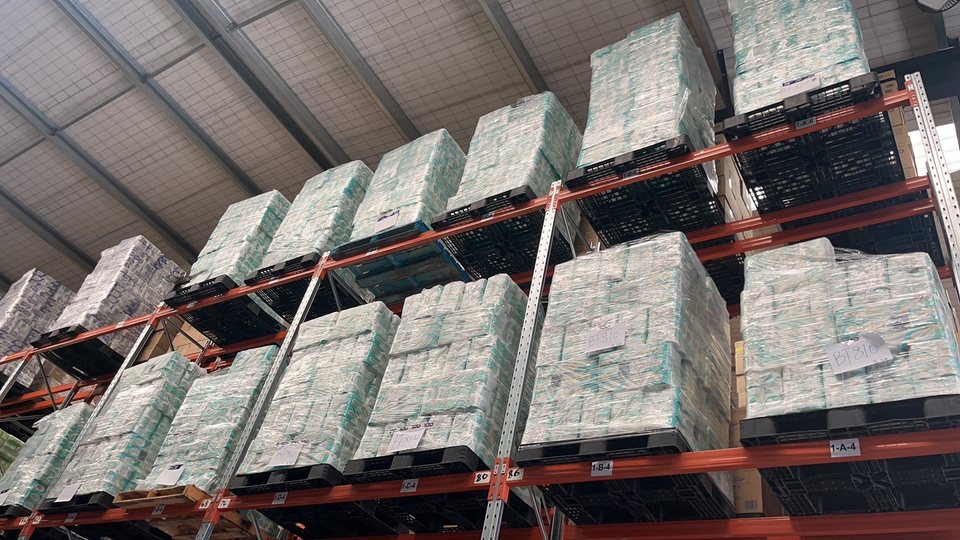
Action: ask for the warehouse location and a typical order to delivery time for your region. Ask what happens when a line runs out.
- Local inventory beats import to order for bulky paper.
- Get delivery times for your region in writing.
- Ask how stock outs are communicated and handled.
Step 3: Demand full specifications for every line
A tissue listing without specifications is a guess. Before you range a product, you need ply, sheets per pack, sheet size, packs per bundle and bundles per carton. These numbers decide your shelf space, your back room space and your price per sheet.
Two facial tissue boxes can look the same on shelf and carry very different value. A 4 ply box with 90 sheets of 200 x 210 mm is a premium product. A 2 ply box with 200 sheets of 190 x 210 mm is a volume product. Shoppers compare by feel and by count, so you need both numbers to set the right price.
Pack language matters too. If your store serves a mix of shoppers, bilingual Chinese and English packs can sell faster than English only packs in the same spot. A good supplier tells you which version you are ordering.

Action: request ply, sheet count, sheet size, packing and pack language for every line on your shortlist. Ask for samples of anything you have not handled.
- No specification sheet, no listing.
- Compare price per sheet, not price per pack.
- Check pack language against your shopper mix.
Step 4: Check certification and manufacturing standards
Paper products carry environmental and quality claims, and you are responsible for what you sell. Ask which lines carry certification marks such as FSC Mix Credit, and ask what quality systems the manufacturer runs.
Large tissue manufacturers publish their standards. Hengan International Group, which makes Hearttex, lists ISO 9001, ISO 14001, ISO 45001 and ISO 50001 certification and runs eight major paper production bases. That kind of disclosure is what you want behind any brand you put on shelf.
Claims on pack also need to be accurate under the Fair Trading Act. The Commerce Commission sets out what businesses must do to avoid misleading claims. A supplier who can explain every claim on their packaging is a supplier who protects you. If you want to understand the most common paper claim, read our guide on what FSC Mix Credit means on tissue packaging.
Action: ask for the list of certified lines and the manufacturer's quality certifications. Keep a copy on file.
- Know which lines carry FSC or other marks.
- Ask who manufactures the product and to what standard.
- Make sure the supplier can back every on pack claim.
Step 5: Fit cartons and bundles to your store
Carton configuration decides how often you reorder and how much back room space you lose. A carton of 24 boxes suits a busy supermarket. A small grocer in Tauranga may prefer bundles of 5 or 6 so stock turns before it fades.
Look at the bundle and carton numbers alongside your weekly sales. If a line sells 10 packs a week and arrives in cartons of 60, that is six weeks of stock sitting in the back. If it sells 50 packs a week, the same carton is a good fit.
Ask whether you can mix lines within an order to reach a delivery minimum. Mixed orders let smaller stores range more variety without overstocking any single line.

Action: match each line's carton size to your weekly sales and ask about mixed order minimums.
- Aim for two to four weeks of stock per carton.
- Smaller stores should ask about bundle level ordering.
- Mixed orders let you range wider without overstocking.
Step 6: Ask what promotion support comes with the range
Paper is a traffic driver. Shoppers notice a good price on toilet tissue, and a planned promotion calendar can lift the whole category. A supplier who only sells you stock leaves the selling to you.
Ask for the promotion plan for the next two quarters. Good suppliers plan regular deals, help with new listings and supply display ready stock for end caps and checkout counters. Pocket handkerchiefs and small wipes packs, for example, work well as counter impulse lines when the supplier supports them.
Action: request a promotion calendar and ask what support comes with a new listing, such as display stock or introductory deals.
- Promotions turn paper into a traffic driver.
- Ask for a written plan, not a promise.
- Use impulse formats near the checkout.
Step 7: Test responsiveness before you commit
The final check is the simplest. Send an enquiry and time the answer. Ask a specific question, such as the carton count for a 4 ply 10 roll toilet tissue pack, and see whether you get a real number or a vague reply.
Responsiveness is what you will live with after the listing. Fast communication, flexible ordering and reliable after sales service matter more over a year than a small difference in unit cost. One responsive supplier for both retail products and operational essentials, such as hand towels and napkins for your own staff areas, also cuts your vendor list.
Action: send one specific question to each shortlisted supplier and compare the speed and quality of the replies.
- Ask a precise question and measure the reply.
- Weigh service over small unit cost gaps.
- Use one supplier for retail and operational paper where possible.
Putting the checklist to work
Score each supplier from one to five on all seven steps. Anything under 25 out of 35 is a supplier you will spend time managing. Anything over 30 is a supplier who will manage the category with you.
One Nature is an Auckland-based, 100% New Zealand-owned FMCG company and the official exclusive brand operator for Hearttex in Australia and New Zealand. We hold stock locally, publish specifications for every line on our products page and the Hearttex range page, and support new listings with promotion plans.
Frequently asked questions
How many tissue suppliers should a small grocery store use?
One or two is usually enough. A single supplier with a deep range covers most paper facings, and a second supplier gives you a backup for key lines.
What is the most important specification when comparing tissue?
Price per sheet, worked out from ply, sheet count and pack price. It is the only fair way to compare packs of different sizes.
Do bilingual tissue packs sell better in New Zealand?
In stores with a large Chinese speaking customer base, bilingual packs are often preferred. Ask your supplier which pack language each line uses so you can match your shoppers.
Can I order mixed cartons from a wholesale tissue supplier?
Many suppliers allow mixed orders to reach a delivery minimum. Ask before you sign, as it changes how much variety a small store can carry.
Want to run your current supplier through these seven steps? Contact our team for full specifications, carton details and a promotion plan for your store.
Related articles

What Does FSC Mix Credit Mean on Tissue Packaging?
FSC Mix Credit on tissue explained: what the label promises, how the credit system works, controlled wood, and what it means for retailers.

Cotton vs Slim Fit Sanitary Pads: How NZ Retailers Cover Every Shopper
Cotton vs slim fit sanitary pads compared side by side, plus night pads vs overnight panties and a simple guide to the right mix for your st...

Hearttex in New Zealand: A Global Tissue Brand, Now Supplied Locally
How Hearttex, the household paper brand of Hengan International Group, reaches New Zealand shelves through One Nature, its official exclusiv...